
Powered By



Sjögren’s disease is known for causing dry eyes and dry mouth, but it can also affect other oral tissues, including the tongue. For many people, tongue changes may be one of the earliest or most uncomfortable oral symptoms of Sjögren’s. Understanding why these changes happen can help you recognize symptoms and know when to seek care.
If you think you may have Sjögren’s disease, schedule an appointment with your healthcare provider.
Sjögren’s disease is a chronic (ongoing) autoimmune disorder that affects people in different ways but often leads to dryness. Common symptoms include dry eyes, dry mouth, dry or itchy skin, dryness in the nose and throat, vaginal dryness, and more. When Sjögren’s causes dry mouth, it can directly affect the tongue.
Xerostomia (dry mouth) occurs when the salivary glands don’t make enough saliva. This watery liquid plays several important roles in oral health. Saliva lubricates tissues to keep the mouth moist, washes away food particles and bacteria to help keep the mouth clean, and helps start the digestion process.
Without adequate saliva, the tongue may:
In addition to being painful or uncomfortable, these changes can affect everyday activities such as chewing, swallowing, and speaking.
Tongue changes related to Sjögren’s disease can vary from person to person. They may appear early in the disease or develop over time. For some people, tongue symptoms are mild, but for others, they can become uncomfortable or painful. Many of these changes are linked to dryness and reduced saliva production.
Below are some of the common tongue changes linked to Sjögren’s disease.
Without enough saliva, the tongue may lose its normal rough surface and appear smooth, shiny, or glossy. This change may also come with soreness or a burning sensation.
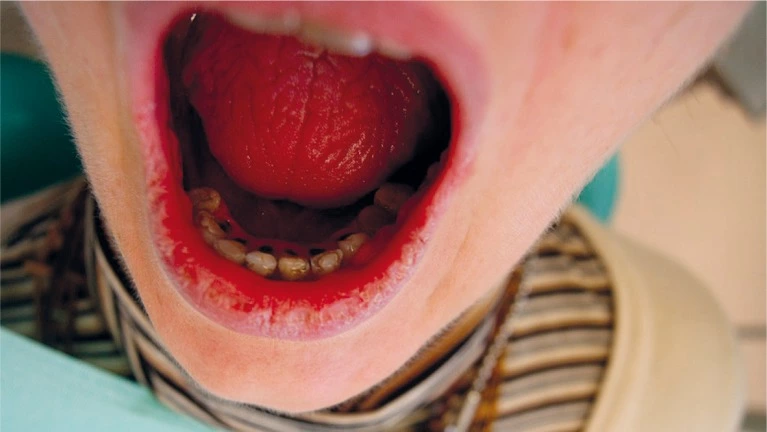
Chronic dryness can cause fissures (cracks or grooves) to form on the surface of the tongue. These fissures can trap food particles and bacteria, leading to discomfort, bad breath, swelling, irritation, and a higher risk of infection.

Some people develop a scalloped appearance along the sides of the tongue, giving it a wavy or indented look. This can happen when the tongue presses against the teeth and may be more noticeable when the tongue is swollen or dry.
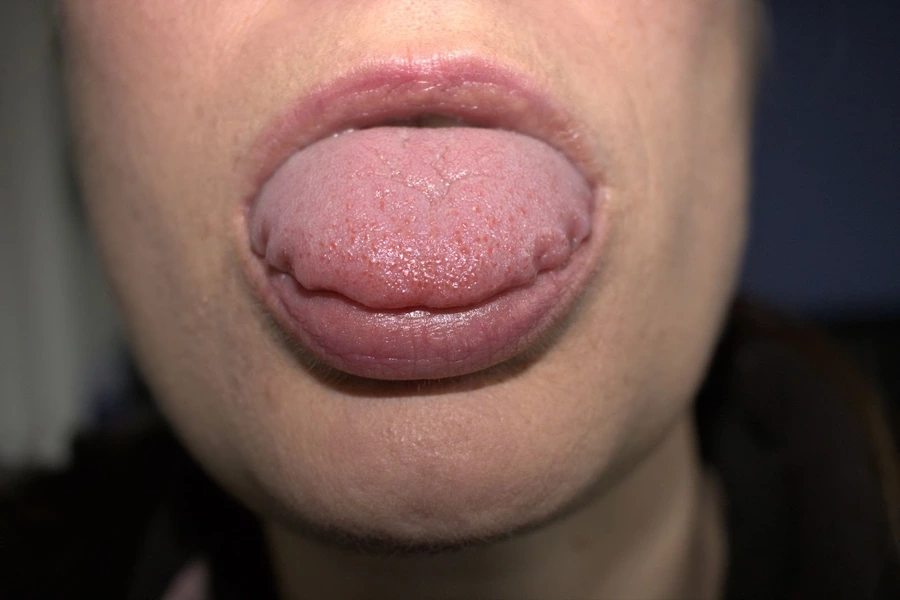
The tongue may look very dry and feel rough or sticky or have a different texture than usual. A dry tongue can make eating, speaking, and swallowing less comfortable and may get worse as the day goes on.
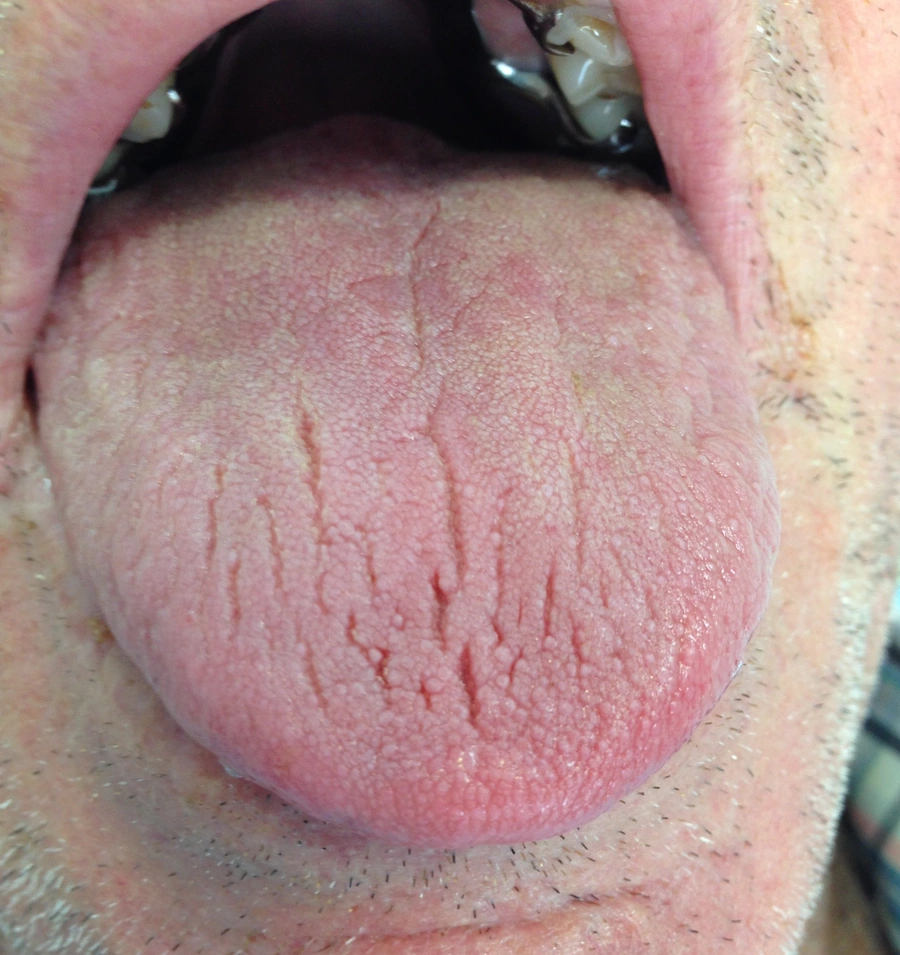
Many people with Sjögren’s notice increased sensitivity to spicy, salty, or acidic foods. These foods may cause stinging, tingling, or burning sensations, especially when the tongue is already dry or irritated.
Reduced saliva can make it harder to chew and swallow dry foods such as bread and crackers. You may need to sip water often while eating to help foods go down more easily.
Sjögren’s can affect how food tastes. Some people notice that flavors taste dull or seem different, while others experience metallic, bitter, or other unpleasant tastes.
Some people have ongoing soreness or burning in the tongue even when there are no visible changes or mouth sores. This discomfort can come and go and may worsen during flares or times of increased dryness.
Dry mouth from Sjögren’s disease may also lead to other oral health issues. People with chronic dry mouth have an increased risk of tooth decay, candidiasis (oral thrush), cracked lips, gum disease, and other complications.
Regular dental care is an important part of managing oral Sjögren’s symptoms. Seeing a dentist at least twice a year for exams and cleanings can help catch problems early and protect your tongue, teeth, and overall oral health.
Managing Sjögren’s also requires care from a healthcare provider familiar with immune system disorders. Sjögren’s can occur alongside other autoimmune diseases, such as rheumatoid arthritis and systemic lupus erythematosus (lupus). Working with a clinician who can recognize overlapping symptoms can help ensure you receive the most appropriate care.
Tongue and mouth symptoms may flare during periods of increased disease activity. Contact your healthcare provider if you have tongue pain, burning, sores, new or worsening symptoms, or trouble eating, speaking, or swallowing.
Dry mouth can lead to oral health problems such as cavities, gum disease, and infections. Sjögren’s disease itself can also cause symptoms in other parts of the body, like joint pain or skin rashes, so tell your clinician about any new symptoms.
Your healthcare provider may prescribe saliva-stimulating medicines to help your salivary glands produce more saliva. Lifestyle changes can also help reduce tongue and mouth dryness and irritation. Consider these everyday habits:
Before trying over-the-counter treatments, check with your doctor or dentist. Sjögren’s disease isn’t the only condition that can cause dry mouth, and it’s important to get an accurate diagnosis, so you receive the right treatment for you.
On MySjögrensTeam, people share their experiences with Sjögren’s disease, get advice, and find support from others who understand.
How has Sjögren’s affected your tongue? Let others know in the comments below.
Get updates directly to your inbox.





 Continue with Facebook
Continue with Email
Continue with Facebook
Continue with Email
Continue with Facebook
Continue with Email
Continue with Facebook
Continue with Email
Become a member to get even more





 Join
Join

 Your Privacy Choices

This is a member-feature!
Sign up for free to view article comments.
I have had sjorgrens since 1976. My tongue is raw most all the time.
We'd love to hear from you! Please share your name and email to post and read comments.
You'll also get the latest articles directly to your inbox.