
Powered By



 Continue with Facebook
Continue with Email
Continue with Facebook
Continue with Email
Getting diagnosed with an autoimmune condition like Sjӧgren’s disease can be difficult. Symptoms can overlap with other conditions and may appear at different times, making it hard for healthcare providers to figure out exactly what’s going on. Sjogren’s is also a systemic disease, meaning it can affect the entire body and cause widespread symptoms that may not appear related at first.
Understanding the signs and symptoms of Sjögren’s disease can help you recognize what’s going on in your body, help you advocate for yourself at doctor’s appointments, and get you closer to the proper treatment plan. Learn about the symptoms of Sjögren’s disease so you can track your symptoms and work with your healthcare providers to figure out treatment.
In Sjogren’s disease, the immune system attacks the glands in the body that control moisture. As a result, people with Sjogren’s experience dryness in different parts of their bodies, including their eyes.
Nearly everyone living with Sjӧgren’s disease deals with dry eyes, though they can range from merely annoying to quite severe. Dry eyes often burn, itch, or make you feel like you have something gritty stuck in them. You might feel like you’re blinking a lot because your body is trying to produce the moisture your eyes need. This can make your eyes look red or watery, too.
Some people with dry eyes become sensitive to bright light, especially fluorescent bulbs. Others experience blurry vision that doesn’t seem to have another cause. Over time, dry eyes can become inflamed and you might find that your eyelids also seem irritated and itchy from this.
Dry eyes often occur as you age, which can make it complicated to get a diagnosis of Sjӧgren’s. You may need to talk to a few different providers, including an ophthalmologist, to get diagnosed. An ophthalmologist can perform a test called Shirmmer’s. In this test, the eye doctor places a small filter paper inside the lower lid, and it measures the amount of tears your eyes produce in five minutes.
Dryness can also occur in the mouth. In Sjӧgren’s, your salivary glands often can’t produce enough saliva. This can make it difficult to taste your food, swallow, or talk without getting a drink of water. Dry eyes and dry mouth are the two most common symptoms of Sjӧgren’s. Almost everyone who is diagnosed with Sjӧgren’s experiences these two symptoms.
Dry mouth often feels chalky, like you’ve eaten something very dry and it’s absorbed all of the moisture. You may find that you wake up at night just to get a drink or need water to swallow your food. Long term, having a dry mouth can lead to tooth decay and more cavities in your teeth and even some mouth infections. If you have infections like thrush regularly or find that they don’t go away, it might be time to be evaluated for Sjӧgren’s.
Some people who live with Sjӧgren’s also experience fatigue. This is more than being tired here or there. This kind of fatigue is persistent and often exists regardless of how much rest you’ve gotten recently. It may interfere with your daily life, causing you to cancel activities or not be able to do things that you’ve previously done without any problems. Excessive tiredness that occurs with dry eyes and dry mouth may mean it’s time to talk to your doctor about Sjӧgren's.
Symptoms in your joints, including pain, stiffness, and swelling, may also come along with Sjӧgren’s. Most people find that multiple joints will hurt at the same time and that the pain comes and goes. It’s most common in your smaller joints, like your ankles, fingers, and wrists, though it can show up in joints like your hips, shoulders, and knees, too.
This can be a confusing symptom, because Sjӧgren’s often occurs alongside other autoimmune disorders, like rheumatoid arthritis, which also lead to joint pain, commonly on smaller joints. Figuring out exactly what to diagnose you with and which condition is causing which symptoms can take time to puzzle out. If your joints are swollen or tender to the touch, this may tell your doctors to look for another condition in addition to Sjӧgren’s.
The salivary glands often become swollen in Sjӧgren’s due to how the immune system affects them. You may notice swelling around your mouth, face, or neck. Swelling right behind your jaw or in front of your ears is particularly common. Your lymph nodes can also become swollen. If you notice painful unilateral swelling that doesn’t seem to go away, make sure you let your doctor know.
In addition to dealing with dry eyes and dry mouth, some people with Sjӧgren’s also deal with extremely dry skin. This is due to a process similar to the one that causes dryness in other areas.
Your skin might itch or crack, look scaly, or become discolored. Dry skin is most common on your arms and legs, or around the middle of your waist. Dry skin is something many people experience at some point in their lives, but if it occurs for a long period of time, it’s worth mentioning to your doctor — especially if you’re experiencing any of the other symptoms listed here.
Dryness can also occur in the vagina due to Sjӧgren’s. This symptom can be complicated by the fact that vaginal dryness is also a common symptom of other conditions, like menopause. However, according to the Johns Hopkins Sjӧgren’s Center, women with Sjӧgren’s are between two and three times more likely to complain about vaginal dryness than other menopausal women.
Vaginal dryness can make sex uncomfortable. You might experience soreness, itching, burning, or bleeding after intercourse. Vaginal dryness can also lead to yeast infections that won’t go away or keep coming back. The pain and discomfort can cause someone to avoid sex entirely. Your doctor may recommend using lubricants during sex, vaginal moisturizers, or estrogen creams to help with dryness.
With all the dryness that can occur in the rest of the body with Sjӧgren’s, it makes sense that you would experience dryness in your nose as well. Nasal dryness and a persistent, dry cough with Sjӧgren’s can feel like you’re always struggling with your sinuses or dealing with postnasal drip. This kind of dryness can make it harder to recover from respiratory infections, which can turn into bronchitis or pneumonia if untreated.
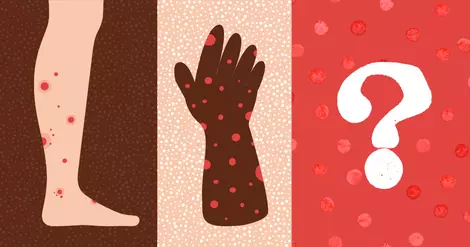
Sometimes, people with Sjӧgren’s disease also get skin rashes. While there’s no single rash that’s specific to this condition, rashes often occur because of dry skin or a type of dermatitis. Occasionally, people with Sjӧgren’s can also get rashes connected to vasculitis (inflammation of the blood vessels). These usually have blood spots, called purpura, that are purple or red in color and don’t get lighter when you press on them. If you have a rash like this, you should talk to your doctor or a dermatologist.
If you feel like your fingers or toes feel tingly or numb, that can be connected to Sjӧgren’s. These symptoms mean that Sjӧgren’s is affecting your nervous system. You may only experience numbness or tingling in certain spots, or it may be more widespread, affecting several fingers or toes at one time.
If you have any of the symptoms noted above and they’re interfering with your daily life or have been occurring for a long period of time, talk to your doctor. If you have significant eye and mouth dryness, that’s certainly a sign to talk to your doctor about Sjӧgren’s disease.
Your rheumatology team can help you get the diagnosis and treatment you need. Your specific treatment plan will depend on what parts of the body are affected by Sjӧgren’s. Since some of the symptoms of Sjӧgren’s disease can cause damage if left untreated, getting diagnosed as early as possible is important.
On MySjögrensTeam, people share their experiences with Sjӧgren’s, get advice, and find support from others who understand.
What were the signs and symptoms of Sjӧgren’s that you experienced before you were diagnosed? Let others know in the comments below.
Get updates directly to your inbox.


Can the lymph nodes in your armpit swell with Sjogren syndrome


 Continue with Facebook
Continue with Email
Continue with Facebook
Continue with Email
Continue with Facebook
Continue with Email
Continue with Facebook
Continue with Email
Become a member to get even more





 Join
Join



 Your Privacy Choices

This is a member-feature!
Sign up for free to view article comments.
I had extreme pain in all my joints and it was has to be Mobile at times. One day when it hurt so bad while teaching that I could hardly get up from the floor, I knew I had to go to the doctor.
We'd love to hear from you! Please share your name and email to post and read comments.
You'll also get the latest articles directly to your inbox.