
Powered By



Dry eyes and dry mouth are the most well-known symptoms of Sjögren’s disease (previously called Sjögren’s syndrome). For some people, the autoimmune disease can go beyond gland dryness. Sjögren’s can affect other areas of the body, such as the joints, muscles, skin, and blood vessels. When Sjögren’s affects the blood vessels, it can cause a condition doctors call vasculitis.
Vasculitis — inflammation of blood vessels — can occur if Sjögren’s impacts the cardiovascular system. Signs of vasculitis often include purplish spots or a skin rash. Disrupted blood flow can lead to serious complications, so it’s important to be evaluated promptly by a healthcare provider if you notice any signs of vasculitis. A doctor will be able to recommend an appropriate treatment for you based on the severity of your vasculitis.
Below, we’ll discuss early mild vasculitis in Sjögren’s, including common signs and how the condition is usually managed.
When small blood vessels directly below the skin’s surface are inflamed, it’s called skin vasculitis or cutaneous vasculitis. This type of vasculitis is common among people with Sjögren’s. It’s thought to affect around 10 percent of people with the autoimmune disorder. Some people may even experience skin vasculitis as their first symptom of Sjögren’s.
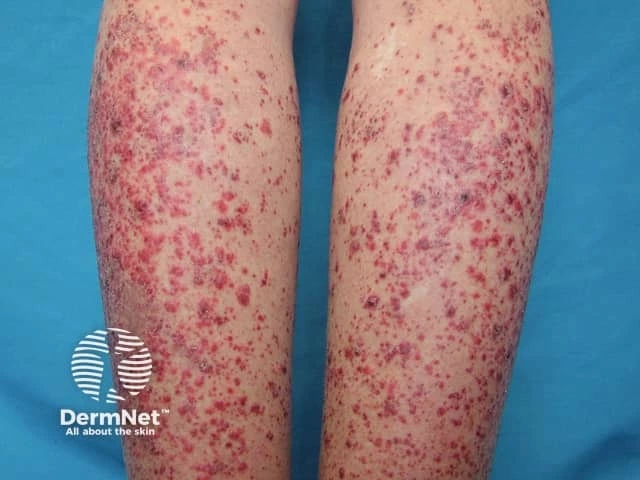
Skin vasculitis often appears as small lesions (spots) or rashes on the legs or torso. These spots may appear purple, red, dark brown, or black, depending on your skin tone.
Often, you’ll be able to feel these rashes or spots with your fingers. Doctors refer to this as palpable purpura. If multiple lesions occur in one area, your skin may become irritated or begin to break down, causing ulcers (open sores) to form. The most common place this happens is around the ankles.
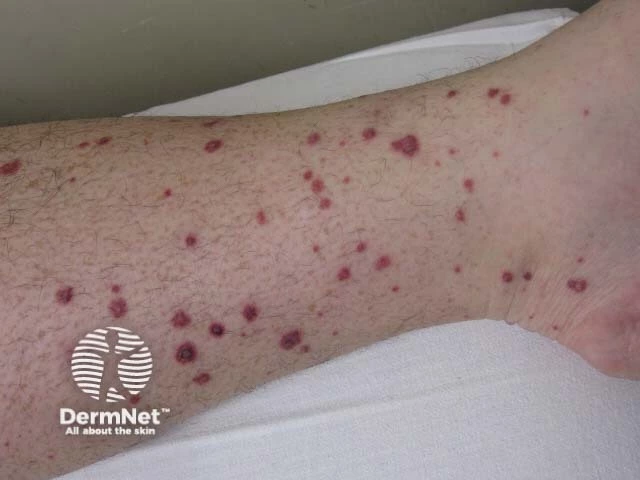
About half of the people with Sjögren’s who get skin vasculitis will only have it once. The rest tend to have many episodes over time. Recurring lesions can darken the skin.
Vasculitis can also be a systemic condition that affects other parts of the body. You may see different signs of vasculitis depending on which blood vessels and bodily systems are involved. Other signs may include:
Sjögren’s disease is a disorder of the immune system. The immune system is your body’s defense against illness and injury. It fights off harmful bacteria and helps you heal. Autoimmune disorders like Sjögren’s occur due to immune system dysfunction. This leads the immune system to label tissues and cells of the body as harmful and attack them.
In Sjögren’s, immune dysfunction leads to the buildup of lymphocytes (immune cells) in the lacrimal and salivary glands. This leads to inflammation that damages the glands, resulting in dry eyes and mouth. People with Sjögren’s also tend to have other types of overactive immune cells called B cells. These cells make antibodies that target certain proteins in the body — most commonly Ro and La. Overactive B cells can also create cryoglobulins (abnormal proteins).
Cryoglobulins and autoantibodies, such as anti-Ro and anti-La, can build up in or around blood vessels. This causes inflammation and leads to vasculitis. In people with skin vasculitis, this damage causes blood to leak out of the small blood vessels near the skin’s surface. Skin vasculitis has been linked to more severe Sjögren’s disease.
Getting a vasculitis diagnosis isn’t always a fast process. Your healthcare provider will likely ask for a detailed medical history. They will want to know how the rash began and progressed and if you have any neuropathy symptoms like tingling, numbness, or loss of sensation. This will be followed by a thorough physical exam, and they will likely recommend multiple tests.
Testing for vasculitis may include:
Depending on your test results, your doctor may recommend a skin biopsy to confirm a diagnosis of vasculitis. This is where a small sample of affected skin is removed and examined under a microscope. A skin biopsy is typically done with local anesthesia, and the affected area may be closed with one or two stitches.
Your doctor will need to rule out other potential causes of your symptoms, which isn’t always a quick process. Because of this, several follow-up appointments or tests may be needed before you receive a diagnosis of vasculitis. If your doctor suspects your vasculitis is caused by your Sjögren’s or another autoimmune disease like lupus, they may refer you to a rheumatologist. If vasculitis is suspected, your doctor will also probably screen you to see if vital organs like the kidneys and lungs are involved.
Management of vasculitis depends on how severe it is. For early, mild cases of vasculitis, your provider may recommend managing it through conservative means. If your vasculitis affects more than one part of your body or is severe, your treatment plan will differ.
People with mild vasculitis are often treated with monitoring and supportive strategies. These measures are often effective for resolving mild cases of vasculitis. To manage swelling and promote healing, your doctor may suggest you:
If your vasculitis doesn’t resolve with conservative treatment or is severe, your healthcare provider may prescribe medications that help manage immune system dysfunction. Your doctor will likely ask you to continue supportive measures like elevating your legs.
Medications your doctor may prescribe for vasculitis include:
Corticosteroids are used to calm inflammation. They’re often prescribed for episodes of vasculitis that don’t resolve with conservative treatment or those that come back after resolving. Steroids are generally taken for short periods.
For more severe vasculitis, immunosuppressives — medications that weaken the immune system — are sometimes used. However, these are rarely prescribed for people with vasculitis and Sjögren’s. More often, doctors will recommend treating vasculitis by addressing Sjögren’s as the underlying condition. Hydroxychloroquine, a drug commonly used to treat Sjögren’s, may be prescribed instead.
Stronger immunosuppression is necessary when vital organs like the kidneys, lungs, or nerves are involved. This might include cyclophosphamide, rituximab, IV immunoglobulin (IVIG), or plasmapheresis.
Around 90 percent of cases of skin vasculitis are reported to resolve within a few months. The remaining 10 percent of people with skin vasculitis will deal with the condition, on average, for two to four years.
With vasculitis, inflammation can make it harder for blood to travel throughout the body. This can sometimes lead to disrupted blood flow to organs, such as the heart and brain. These situations require urgent medical care.
Seek emergency medical care if you develop trouble breathing or other symptoms of a heart attack. If you develop a fever or if your hands or feet feel numb or tingly, see a healthcare provider as soon as possible.
On MySjögrensTeam, people share their experiences with Sjögren’s, get advice, and find support from others who understand.
Have you experienced vasculitis with Sjögren’s? Let others know in the comments below.
Get updates directly to your inbox.


Is Vasculitis different from chronic venous insufficiency?



 Continue with Facebook
Continue with Email
Continue with Facebook
Continue with Email
Continue with Facebook
Continue with Email
Continue with Facebook
Continue with Email
Become a member to get even more





 Join
Join

 Your Privacy Choices

This is a member-feature!
Sign up for free to view article comments.
I recently had a case of vasculitis caused by sjogrens. My dermatologist did a biopsy to confirm it. You can ask your rheumatologist about it. If the PA doesn’t do anything ask to see the dr. If you… read more
We'd love to hear from you! Please share your name and email to post and read comments.
You'll also get the latest articles directly to your inbox.